

The storm in your head
What happens when treatment ends, but the storm in your head doesn’t?
When treatment finishes, everyone expects you to pick up where you left off. But it’s rarely that simple, especially when you’re young. How do you live with the anxiety and uncertainty about the future?
Through the Too Young To Stop campaign, Anticancer Fund is raising awareness for young people going through cancer. By translating scientific evidence into tangible care, we help AYAs (Adolescents and Young Adults) rebuild their confidence and step back into life.

You don’t have to be strong every single day.
Give yourself space to feel whatever comes your way.
But try, always, to find a ray of light, no matter how small.
And surround yourself with the people you love, because together, the heavy days feel just a little easier.”
Anticancer Fund has invested in the Boost Your Mind project, a study using mindfulness exercises to give young people with cancer practical tools to better manage stress, pain, and negative emotions.
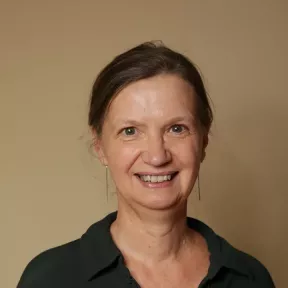
Professor Katleen Van der Gucht, lead researcher on the Boost Your Mind study and founder of the Leuven Mindfulness Centre (UZ Leuven):
"The end of treatment does not automatically mean returning to 'normal' life. Patients can experience significant difficulty with fear of the disease returning, uncertainty about their future, and the physical and emotional consequences of treatment, such as fatigue and cognitive complaints."
"In AYAs, we see that concerns about fertility, relationships, education or work, and changes in their identity or body image also emerge very strongly on top of that. At the same time, support and structure from healthcare or the hospital often suddenly fall away, leaving some AYAs feeling isolated at the very moment they are trying to rebuild their lives."
A tailored approach for young people
The Boost Your Mind study was specifically developed with young people’s lives in mind, featuring short mindfulness exercises that build towards manageable habits, as well as the option to bring a friend, partner, or family member along for support.
The project was conducted across four Belgian university hospitals: UZ Leuven, UZ Gent, UZA, and UZ Brussel.
Professor Katleen Van der Gucht:
“Young adulthood is a period of development and change, making it an ideal opportunity to cultivate new habits, learn to manage stress, and shape a picture of yourself and your future. Mindfulness can help strengthen awareness and emotional resilience, teaching young people to navigate difficult experiences with greater flexibility.”
A proven long-term impact
The study results speak for themselves: participants quickly felt emotionally stronger, experienced less stress and fewer negative thoughts, and even three months later, they still reported an improved quality of life.
Professor Katleen Van der Gucht:
“The fact that participants still felt emotionally stronger months later shows that mindfulness equips people with skills they can keep using long after the sessions have finished. It helps them recognize stress and difficult thoughts more quickly and respond to them with greater awareness and self-compassion. For AYAs who have faced cancer, these remain valuable tools as they navigate uncertainty and the challenge of rebuilding their everyday lives. What probably resonated most was the sense that they had something they could rely on entirely by themselves. Something that helped them handle tough moments, rather than being solely dependent on external support.”
Boost Your Mind - study
At a glance
Target group: AYAs (Adolescents and Young Adults) aged 14 to 24 who have recently completed cancer treatment.
Study: 8 interactive 90-minute sessions featuring mindfulness exercises.
Total investment: €218,000
Impact
Reduced stress: Experience less tension and anxiety.
Higher quality of life: Feel noticeably better.
Resilience: Feel more empowered and equipped to handle life's challenges.
From research to care
With Boost Your Mind, we are delivering on our promise of Turning evidence into care: young people received practical, science-backed tools to better manage daily stress and change. This study didn’t end with a published paper, it filled a real, existing gap. The project laid the foundation for embedding tailored psychosocial support for AYAs into standard healthcare.
Professor Katleen Van der Gucht:
“Mental health support is incredibly important for AYAs because cancer hits during a critical stage of their development. It is a time when young people are forming their identity, gaining independence from their parents, undergoing major body changes through puberty, building intimate relationships, working on their studies or career, and mapping out their future. Cancer can disrupt or delay all these milestones, leaving them feeling ‘out of step’ with their peers. Psychological support helps AYAs process their experience with cancer, regain control of their own lives, and guides them through the transformations they are experiencing.”