

A day in the life of a patient advocate
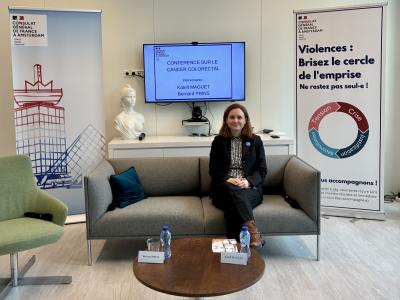
Katell Maguet brings a uniquely powerful perspective on cancer at young age: she is a former researcher, a trained patient advocate, and a survivor of early-onset colorectal cancer.
Because she understands both the science side and the human experience, she is the ideal bridge to explain how patient advocacy actively shapes better clinical research.
At Anticancer Fund, patient advocates like Katell are essential when we fund clinical trials. We require researchers applying for funding to include a Letter Of Intent (LOI) of a patient group, so that every study is truly patient-centred. Additionally, our grant evaluation committee, or the team reviewing each application, includes at least one patient advocate.
We are sharing Katell’s insights not only to raise awareness for AYAs (Adolescents and Young Patients) with cancer, but also to show why patients advocates, like Katell, are essential in making sure the research we support truly benefit patients.
A day in the life of Katell Maguet
Morning: Smarter science is patient-centred.
"Today, I start my day by reviewing a research protocol for a grant application. As a patient advocate, I am part of several research groups in Europe and in the USA. When researchers want a patient perspective on a protocol, a grant application or a lay summary, they reach out to me.
I may not understand every detail of the science, and I don’t need to! My role is to make sure that the patient’s perspective is at the centre. What is the target group and how do we recruit them? Are we measuring outcomes that matter to patients? Would patients be willing to participate?
Today’s protocol is about rectal cancer and early-onset patients (aged under 50). For a young person, treatment decisions carry lifelong consequences. Organ preservation, bowel function, fertility, sexual health, and long-term quality of life are critical considerations. Yet these aspects can easily become secondary when the primary focus is treating the cancer.
My role is to ensure that the research questions and the way the study is designed also reflect the realities and priorities of the patients who may eventually receive the treatment."
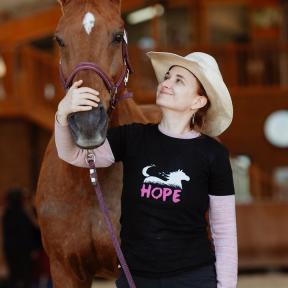
"For example, if fertility could be affected by the treatment, we need to make sure that both women and men are represented in the study. Here, in the initial protocol, the reality that some patients may prioritize fertility preservation over organ preservation was overlooked. After a discussion with the research team, an additional treatment option was added.
Through my EUPATI training, I learned how medicines and clinical research are developed and regulated, but also where patients can contribute meaningfully to the process. It made me realize that I can play a role in connecting the different worlds of research and lived experience.
When patients are involved early, rather than after everything has already been decided, our input can help to shape the research itself. It can lead to more relevant outcomes, more realistic protocols and, ultimately, studies that are more likely to reach and retain the patients they are designed for."
Lunchtime: Connecting patients beyond borders
"By lunchtime, my work shifts from research to social media. Patient advocacy is also about connecting with other patients, sharing experiences, raising awareness and reassuring patients know they are not alone.
For AYAs, cancer disrupts so much of our lives. Sometimes, simply finding someone who understands us can make a real difference."
"I started sharing my story 3 years ago on LinkedIn, which is not the platform which you would think of first for this topic. I published one post about being a scientist, not knowing and so missing the symptoms of colorectal cancer. It got more than 300.000 views and started so many conversations.
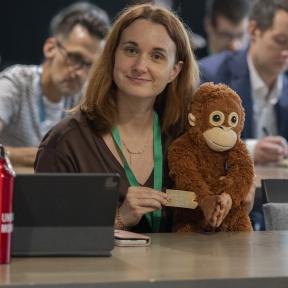
Instagram has allowed me to meet many inspiring young patients around the world. Recently, I connected with Brendan who lives in Australia. For the colorectal cancer awareness event, 50 under 50, at the Australian Parliament, Brendan bought three Punch orangutans from IKEA, one for himself and two for friends. The campaign went viral! The cuddly toys symbolize patients who cannot speak up.
I decided to bring the idea to Europe. Punch now travels with me to conferences, helping me start conversations about early-onset colorectal cancer. He even has his own (small) Instagram account Punch For Hope. He has visited Munich, Brussels, Paris and Dublin. He will soon be making a very special appearance at a conference in London. He is becoming a bit of a star!
But behind the fun is a serious message: different countries and healthcare systems may separate us, but many of our experiences are remarkably similar.
For me, this is another important part of patient advocacy: transforming individual experiences into connections, and connections into a stronger collective voice."
Afternoon: Taking the stage
"Later in the day, I find myself preparing for a scientific conference.
This is another important part of the job: speaking up. I am currently preparing for a symposium on early-onset colorectal cancer in London (with Punch!). My message is serious: young patients are not just statistics."
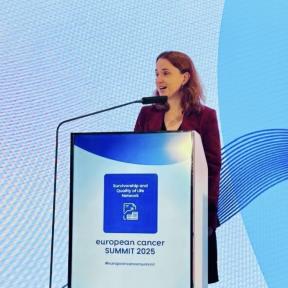
We need to change that narrative. We need broader awareness and research that reflects the reality of younger patients, treatments that consider fertility, quality of life and long-term consequences."
"As a scientist, I understand the importance of data. We need data to understand trends, identify risk factors, develop treatments and improve outcomes. But behind every data point is a person.
Colorectal cancer is still surrounded by taboos and misconceptions. Many people continue to associate it with older ages. Younger patients are diagnosed at a later stage, or their symptoms are often dismissed.
We need to change that narrative. We need broader awareness and research that reflects the reality of younger patients, treatments that consider fertility, quality of life and long-term consequences. And we need patients, researchers and clinicians to work together rather than in separate worlds.
That is why taking the stage matters. Patient advocacy is about making sure that patients are at the centre of the conversation."
Evening: Remembering why advocacy matters
"I travel quite often, most of the time alone (or with Punch now!), for conferences and projects abroad. It is not always easy! Recently, I had a bad experience at Schiphol Airport that reminded me of this.
I was travelling with my Hidden Disabilities Sunflower lanyard. At passport control, when I asked if I could use the assistance lane, the agent told me “You are not disabled. You are not in a wheelchair”. I tried to explain. I mentioned my neuropathy. I explained that standing in long queues, especially at the end of a day of travelling, can be extremely painful. My toes feel as if they are broken. She didn't want to listen.
I shared my experience online and it triggered interesting discussions.
And that is ultimately why patient advocacy matters to me at the end of the day. It is the accumulation of many small actions: reviewing a protocol, asking an uncomfortable question, connecting two researchers, answering another patient's message, writing a post, speaking at a conference, challenging an assumption."

You are not alone. And, you are more than a diagnosis!
Your voice matters. Respect your limits and do only what you feel comfortable doing. You do not need to share everything. In my case, for example, I never post pictures of myself when I am unwell.
And when it comes to your cancer journey: ask questions. Tell your healthcare team what matters to you."