

Concentration of complex cancer care saves lives

BRUSSELS – New Belgian research demonstrates that patients with endometrial cancer have a significantly higher chance of survival when treated in hospitals with sufficient experience and expertise. These findings come from the EFFECT study, led by Prof. Dr. Frédéric Amant (UZ Leuven), and highlight the potential importance of concentrating complex cancer care in specialized centers. The study was made possible through funding from Anticancer Fund and Kom op tegen Kanker.
The EFFECT study analysed the care and outcomes of 4,178 women diagnosed with endometrial cancer between 2012 and 2016. These patients were treated across 60 Belgian hospitals (1). Hospitals that treat a sufficient annual volume of endometrial cancer patients score better on various quality indicators and show higher long-term survival rates compared to low-volume hospitals. The average adjusted five-year survival rate for patients treated in low-volume hospitals was 7 percentage points lower than for those in high-volume hospitals (65.5% versus 72.7%).
Prof. Dr. Frédéric Amant, gynaecological oncologist and lead investigator of the study: "Our research clearly shows that hospitals with more experience in endometrial cancer achieve better results in both quality of care and survival. Especially for high-risk patients, the difference is substantial, and the expertise built by hospitals treating a higher volume of patients truly pays off."
Endometrial cancer is the most common gynaecological cancer
Endometrial cancer is the most common gynaecological cancer and typically occurs after menopause. Global cases are rising due to an aging population and the obesity epidemic. Standard treatment involves the removal of the uterus and ovaries, potentially followed by chemotherapy, radiation, and/or immunotherapy. In Belgium, the average five-year survival rate is approximately 70%, though this varies based on the type of cancer and the patient's age.
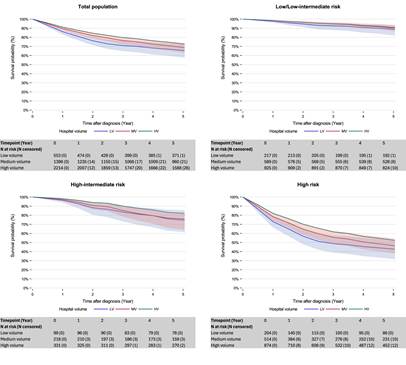
Figure: An increase in hospital admissions is linked to improved survival and quality of care for endometrial cancer in Belgium. Vanbraband, Joren et al. International Journal of Gynecological Cancer, Volume 36, Issue 2, 102849.
Expertise makes the difference
The treatment of endometrial cancer is often complex and requires a multidisciplinary approach. The study confirms that expertise is built through experience and collaboration, yet this expertise remains too fragmented today. Treatment protocols have become increasingly complex in recent years, further emphasizing the need for concentration and specialized knowledge. In 2023, 1,410 women in Belgium were diagnosed with endometrial cancer.
A call for systematic reform
Currently, a cohesive care strategy is lacking for rare and complex cancers. The current fragmented, cancer-by-cancer approach is too slow and does not sufficiently meet patient needs. Nevertheless, this affects 20,000 new patients annually, all of whom have an equal right to quality care and survival. Consequently, we are calling on the government to develop a global organization for this care: kept close to the patient where possible, but concentrated where expertise is required. The new Belgian Cancer Plan offers a unique opportunity to address this now.
David Vansteenbrugge, Director General of Kom op tegen Kanker: "Patients with rare or complex cancers have the right to the best possible care. The EFFECT study confirms that concentrating complex cancer care is not a cost-cutting measure, but a quality-driven choice that saves lives."
Funding: vital for progress
The EFFECT study was realized thanks to funding from Kom op tegen Kanker and Anticancer Fund. Together, they invest in independent quality research that directly contributes to better organization and outcomes in cancer care. The results were published in the professional journal International Journal of Gynecological Cancer.
Lydie Meheus, Director General of Anticancer Fund: "In 2011, Anticancer Fund and Prof. Dr. Frédéric Amant took the initiative to start this research in Belgium based on data available in other countries. However, it takes years of dedication and financial effort to achieve robust results. This is why it is crucial for organizations to co-invest in independent quality research. Only then can policymakers gain the evidence-based insights needed to make choices that truly make a difference for patients."
(1) Data were registered on a voluntary basis with the Belgian Cancer Registry (BCR).
About the EFFECT Study
The EFFECT study (EFFectiveness of Endometrial Cancer Treatment) is a Belgian multicenter observational study where data were prospectively registered with the BCR on a voluntary basis. This study analyzes the quality of care and outcomes for patients with endometrial cancer, mapping variations in care practices between hospitals and examining the relationship between hospital experience and patient outcomes.